Philips HearLink 50 · Technology level · miniRITE R and miniBTE R
Philips HearLink 3050
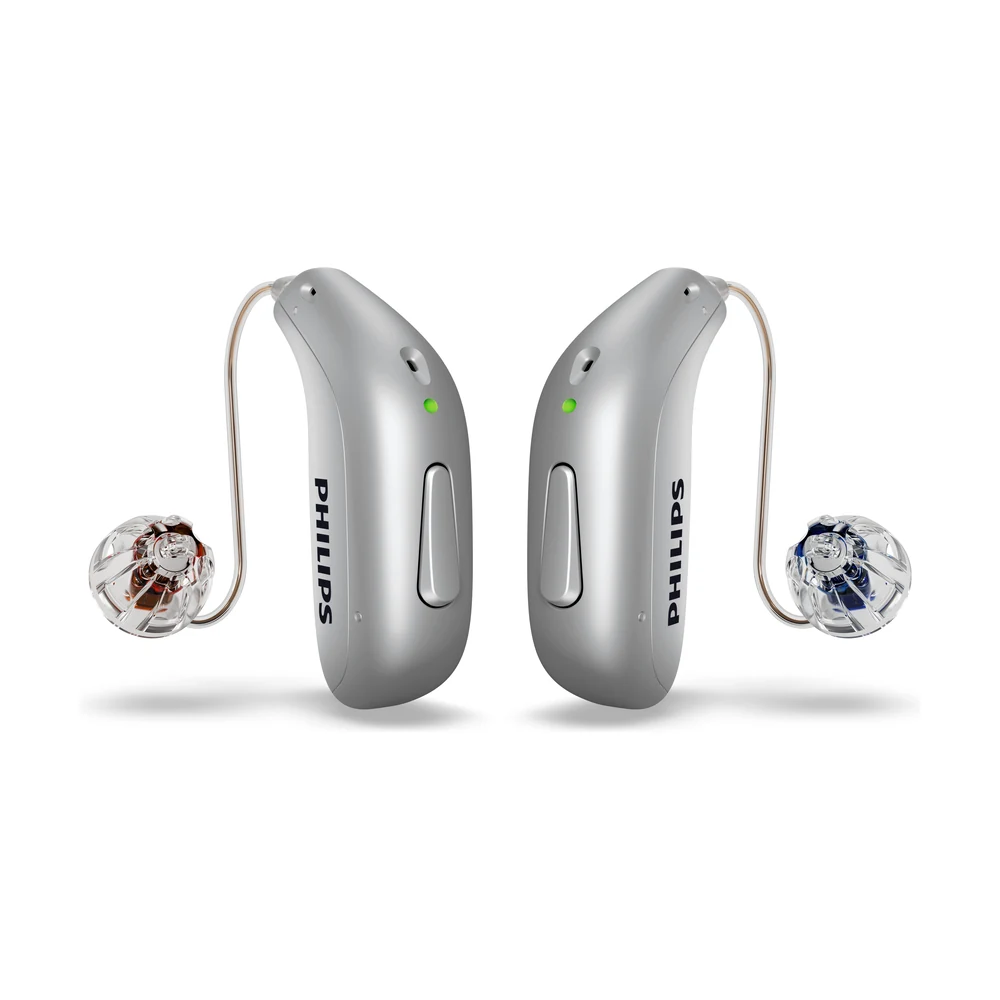
G-Sound is an authorized marketer of Philips hearing aids. Kol Echad (קול אחד) — an authorized marketer through authorized agents nationwide. At G-Sound: help, fitting, accessories, first-line support and coordination of repairs for Philips HearLink hearing aids, nationwide. When a laboratory check is needed, G-Sound coordinates further treatment with the authorized service laboratory for Philips and Oticon in Ramat Gan.
The entry level of the Philips HearLink series. Here you will find what is marked at 3050 in the Philips table, what the levels above it add, and what depends on the style rather than the level.
The four levels in one table, and 3050 among them
Philips publishes a technical data document for each HearLink 50 style, with a Feature overview table by level. The table below copies selected rows from that table, from the miniRITE document (270403UK, 21.02.2024) and the miniBTE R document (285251UK, 01.09.2025). In these rows the values are identical in both documents.
| Feature (Philips name) | 9050 | 7050 | 5050 | 3050 (this page) |
|---|---|---|---|---|
| SoundGuide (motion sensor, according to Philips) | ✓ | ✓ | — | — |
| Frequency Bandwidth | 10 kHz | 8 kHz | 8 kHz | 8 kHz |
| Extended Dynamic Range | ✓ | ✓ | — | — |
| Comfort Control | 4 options | 2 options | — | — |
| AI Noise Reduction | 5 options | 4 options | 3 options | 2 options |
| Speech Clarifier | 3 options | 2 options | — | — |
| Transition (between environments) | 4 options | 3 options | 2 options | 1 option |
| SoundProtect Transient Noise Reduction | 6 options | 5 options | 4 options | 2 options |
| Binaural Noise Management | ✓ | ✓ | ✓ | — |
| Dynamic Directionality | ✓ | ✓ | ✓ | — |
| Fitting Bands | 24 | 20 | 18 | 14 |
| Environments | 13 | 11 | 11 | 9 |
| Airplane Program | ✓ | — | — | — |
✓ = marked at this level in the Philips table. "—" = not marked at this level in the same table. "Options" and "fitting bands" are settings the professional works with during the fitting. More options do not guarantee a particular result for a particular person.
How to read the table
- 3050 versus 5050: Binaural Noise Management and Dynamic Directionality are marked at 5050 and not at 3050, and 5050 has more options in several rows.
- What only 7050 and 9050 have: SoundGuide, Extended Dynamic Range, Comfort Control and the Speech Clarifier. Only 9050 also has the 10 kHz bandwidth and the Airplane Program.
On sound processing in the series, according to Philips: SoundMap 3 uses AI-based noise reduction and advanced directionality. More in SoundMap 3 and background noise. Comparing levels by need and routine: how to choose between HearLink levels.
What is the same at all four levels, according to the same table
- Four manual listening programs, and a music program (HiFi Music Program).
- Handling of wind noise (SoundProtect Wind Noise Management) and soft sounds (Soft Noise Management).
- Changing volume and program on both hearing aids together (Binaural Volume and Program Change).
- Direct streaming and calls without holding the phone are marked at every level. According to Philips, calls without holding the phone are available on selected devices.
What depends on the style and version, not the level
Each level appears both in the miniRITE document and in the miniBTE R document. But each document describes the connectivity package differently:
- miniRITE (2024 document): SoundTie 3 with LE Audio, MFi and ASHA.
- miniBTE R (2025 document): SoundTie 4 with Bluetooth LE Audio, Auracast broadcasts, MFi and ASHA.
An older document does not prove that a capability is missing, and a document from another market does not prove that it exists in the hearing aid you will receive. So the connection is checked for the specific hearing aid and phone: the phone model, the operating system and its version. Philips refers to the Philips compatibility guide for this.
A practical explanation of the phone, the app and pairing: app, Bluetooth and phone · not connecting to iPhone · not connecting to Android. About the two styles: miniRITE R · miniBTE R.
Who does what
- Philips: the brand. The feature table and the connectivity description on this page are taken from Philips technical data documents, listed under "Product information sources" at the bottom of the page.
- G-Sound: a hearing test at home nationwide, by appointment, choosing the level and style, fitting and adjustments as needed.
- A laboratory check, when needed: G-Sound coordinates further treatment with the authorized service laboratory for Philips and Oticon in Ramat Gan.
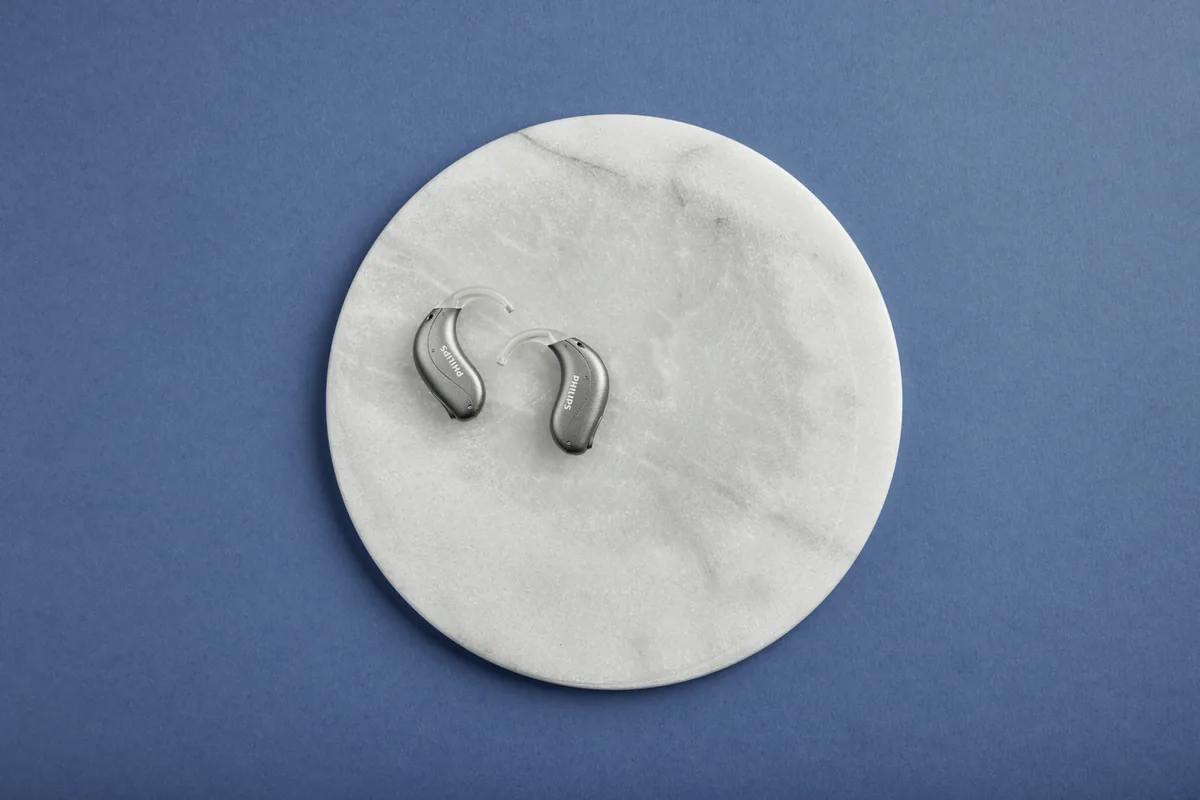
What to check before deciding: in which style and version the hearing aid will arrive, and whether your phone is suitable according to the Philips compatibility guide. Availability, style and compatibility are checked with G-Sound for each customer.
How to continue
The choice starts with a professional hearing test. At G-Sound you can arrange a hearing test at home nationwide, by appointment. After the test we go over the places you spend time in, choose a level and style, and do the fitting and adjustments as needed. Questions about HearLink 3050: 055-3333338, by phone or WhatsApp.
Is 3050 the level that suits me?
Not from the table alone. The table lists what is marked at each level, and does not measure how you will hear with each of them. The level is chosen after a hearing test, in a conversation about your routine and the situations in which hearing is difficult for you, and then the fitting shows how the hearing aid works in practice. Compare it with HearLink 5050, or see the situations on the page who HearLink suits.
All Philips HearLink pages
- Philips HearLink: series page
- HearLink 50 levels and styles
- HearLink 9050
- HearLink 7050
- HearLink 5050
- miniRITE R style
- miniBTE R style
- How to choose and start
- Who HearLink suits
- Philips or Oticon: how to choose
- How visible on the ear
- SoundMap 3 and background noise
- Online hearing test: what it checks
- Fitting and follow-up
- Upgrading from an older Philips
- App, Bluetooth and phone
- Not connecting to iPhone
- Not connecting to Android
- App shows only one hearing aid
- The HearLink button
- TV with HearLink
- HearLink AudioClip
- Accessories and chargers
- Rechargeable and charging
- Charger or Charger Plus
- Care, filters and wax
- Consumable parts
- Troubleshooting and support
- A fault: what to do
- Philips service at G-Sound
- Questions and answers
- Guide for caregivers
- Assisted living and institutions
Product information sources
- Philips — Technical data, HearLink 50 miniRITE (270403UK) · checked 26.10.2026
- Philips — Technical data, HearLink 50 miniBTE R (285251UK) · checked 26.10.2026
- Philips — HearLink 50 miniRITE (product page; instructions for use and technical data are available there) · checked 26.10.2026
- Philips — HearLink 50 miniBTE R (product page) · checked 26.10.2026
- Philips — Compatibility guide · checked 26.10.2026
G-Sound is not the Philips website. Philips is a trademark of Koninklijke Philips N.V. Product information is shown only where it appears in Philips materials; compatibility, style and fit are checked for each customer.
Updated 1 November 2026 · Written by the G-Sound editorial team. Product information is as published by Philips; it does not replace a hearing test or medical advice.
More in English
Frequently asked questions
Questions and answers: HearLink 3050
What is the difference between HearLink 3050 and HearLink 5050?
In the Philips Feature overview table, Binaural Noise Management and Dynamic Directionality are marked at 5050, and at 3050 neither is marked. In the numerical rows, 5050 has 3 options in AI-based noise reduction (3050: 2), 2 Transition options (3050: 1) and 4 SoundProtect Transient Noise Reduction options (3050: 2). Fitting bands: 18 at 5050, 14 at 3050. Environments: 11 at 5050, 9 at 3050. The bandwidth is the same, 8 kHz.
What do 7050 and 9050 have that is not marked at 3050?
SoundGuide, Extended Dynamic Range, Comfort Control and the Speech Clarifier are marked at 7050 and 9050, and not at 3050 and 5050. At 9050 only, the 10 kHz bandwidth and the Airplane Program are also marked. Beyond that, at every level above 3050 the number of options, fitting bands and environments increases, as shown in the table on the page.
How do I know if 3050 is the level that suits me?
Not from the table alone. The table lists what is marked at each level, and does not measure how you will hear with each of them. The level is chosen after a hearing test, in a conversation about your routine and the situations in which hearing is difficult for you, and then the fitting checks how the hearing aid works in practice.
In which styles is HearLink 3050 presented at G-Sound?
At G-Sound 3050 is presented in both rechargeable styles of the series: miniRITE R, in which the speaker is inside the ear canal, and miniBTE R, in which the sound travels through a thin tube or a hook. In the rows on this page, the 3050 values are identical in the miniRITE document and the miniBTE R document. The style is chosen based on the hearing test and the shape of the ear.
Can I talk on the phone through HearLink 3050?
In the Philips tables, direct streaming and calls without holding the phone are marked at 3050 too, as at the other levels. According to Philips, calls without holding the phone are possible on selected devices. Whether it will work with your phone depends on the model, the operating system and its version, and also on the style and version of the hearing aid. Check the Philips compatibility guide, and you can bring your phone to an appointment at G-Sound to try the connection.
What should I know before I start using a hearing aid?
Getting used to a hearing aid differs from person to person, and this is true at every level in the series, not only 3050. After the first weeks it is worth coming back for an adjustment appointment, with a list of what was comfortable and what bothered you. The pace of use at the start is set by the guidance of the professional who did the fitting.
Please do not send sensitive medical information in a message. We go over the relevant details on the phone.
Want help choosing a model?
Tell us briefly what matters to you, and we will help you understand which HearLink model suits you.
Call G-Sound about a Philips HearLink hearing aid.
055-3333338