Size · Style · Everyday look
How visible Philips HearLink is on the ear
G-Sound is an authorized marketer of Philips hearing aids. Kol Echad (קול אחד) — an authorized marketer through authorized agents nationwide. At G-Sound: help, fitting, accessories, first-line support and coordination of repairs for Philips HearLink hearing aids, nationwide. When a laboratory check is needed, G-Sound coordinates further treatment with the authorized service laboratory for Philips and Oticon in Ramat Gan.
Many people hesitate about a hearing aid because of how it looks. Here is what Philips publishes about the size, the difference between the two styles, and what else affects how visible the hearing aid is.
The size according to Philips
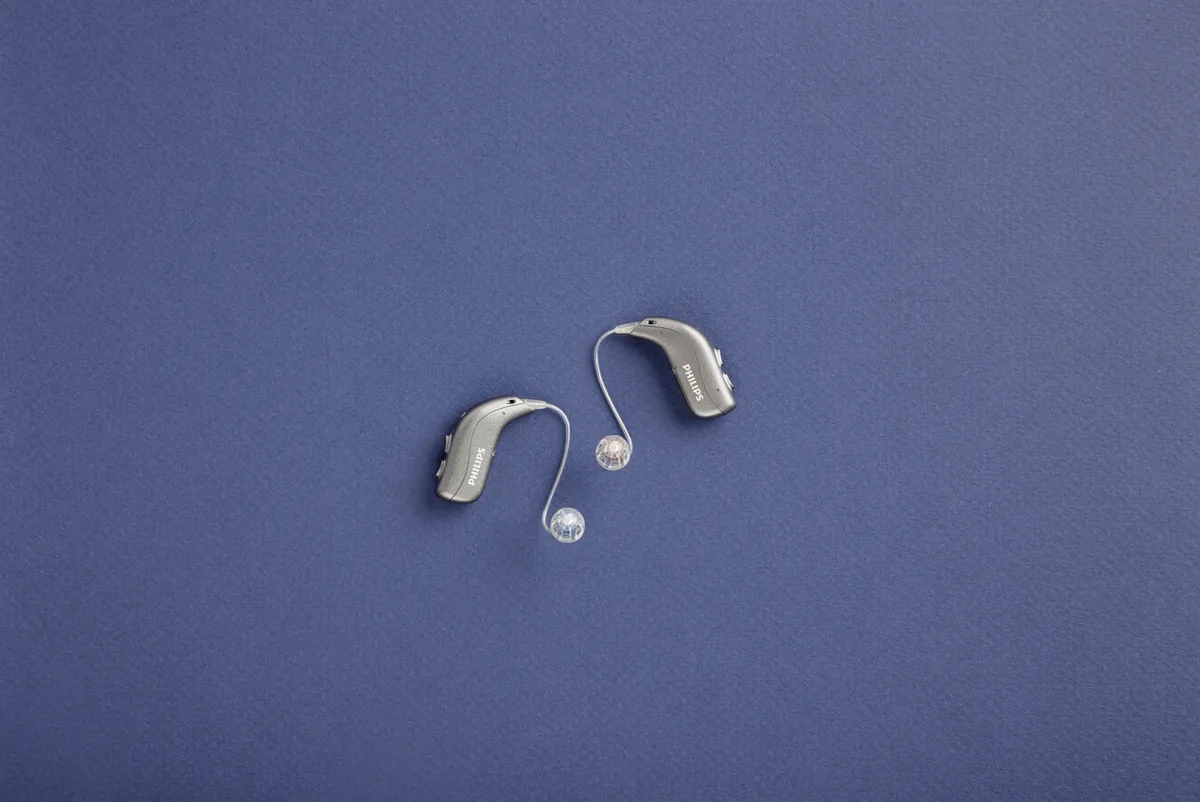
Philips states that a HearLink 50 hearing aid in the miniRITE style is 2.8 cm long and 0.8 cm wide. That is less than three centimetres long, and less than a centimetre wide. Most of the body is hidden behind the ear. What is visible from the side is mainly the thin speaker wire running from the hearing aid to the canal.
According to the Philips instructions for use, the dome is inserted gently into the canal until the speaker wire lies flat against the head. When the wire lies flat, it shows less. An ear grip can also be added to the speaker; according to Philips it is optional and follows the contours of the ear.
For the miniBTE R style, Philips writes that the hearing aids are discreet and rechargeable, but the product page we checked gives no dimensions. So we do not publish a number for it here.
miniRITE R and miniBTE R: how they look
miniRITE R
A small body behind the ear, and a thin speaker wire that goes into the canal. The speaker and dome are chosen at the fitting. The miniRITE R page
miniBTE R
Entirely behind the ear. The sound travels to the canal through a thin tube or a hook, chosen at the fitting. The miniBTE R page
The style is not chosen by appearance alone. The hearing test and the shape of the ear determine what suits you, and appearance is one more consideration within that decision. The full explanation of choosing a level and style is in the guide how to choose Philips HearLink.
What else affects visibility
- Hairstyle and hair length. Hair that covers the ear hides most of the hearing aid. With short hair, the visible part is mainly the wire.
- Glasses. The arm of the glasses and the body of the hearing aid share the space behind the ear. Bring your glasses to the appointment to check comfort and appearance together.
- Wire position. A wire that was not inserted all the way stands out more than one that lies flat against the head. It is a matter of habit, and you practise inserting it at the appointment.
- What people actually see. In a face-to-face conversation people mainly see your face. From the side they see the wire and the edge of the hearing aid.
Discretion is not only about size
Many people worry less about the hearing aid itself and more about handling it: touching the ear, looking for a button, explaining to others. According to Philips, the HearLink 2 app allows easy, discreet control of the hearing aids, including changing the volume and choosing a program from the phone. Philips also states that you can have calls without holding the phone with iPhone and iPad, and with Android devices and Windows computers that support LE Audio. Compatibility with your phone is checked by model. More: Bluetooth and phone.
Other types of hearing aid
The Philips HearLink pages on this site show the two rechargeable HearLink 50 styles: miniRITE R and miniBTE R. If you are looking for another type of hearing aid, tell us in the conversation what matters to you. We will check together what suits your hearing test and routine. An overview of all brands on the site: hearing aids.
See before you decide
Worrying about appearance is legitimate, and it is worth raising in the first conversation. At G-Sound you can arrange a hearing test at home nationwide, by appointment. If it is important to you to see how the style sits on the ear before deciding, tell us in advance and we will check what can be arranged. Example situations and choosing considerations: who Philips HearLink suits.
What to bring to the appointment: the glasses you wear every day, hearing test results if you have them, and your phone.
All Philips HearLink pages
- Philips HearLink: series page
- HearLink 50 levels and styles
- HearLink 9050
- HearLink 7050
- HearLink 5050
- HearLink 3050
- miniRITE R style
- miniBTE R style
- How to choose and start
- Who HearLink suits
- Philips or Oticon: how to choose
- SoundMap 3 and background noise
- Online hearing test: what it checks
- Fitting and follow-up
- Upgrading from an older Philips
- App, Bluetooth and phone
- Not connecting to iPhone
- Not connecting to Android
- App shows only one hearing aid
- The HearLink button
- TV with HearLink
- HearLink AudioClip
- Accessories and chargers
- Rechargeable and charging
- Charger or Charger Plus
- Care, filters and wax
- Consumable parts
- Troubleshooting and support
- A fault: what to do
- Philips service at G-Sound
- Questions and answers
- Guide for caregivers
- Assisted living and institutions
Product information sources
- Philips — HearLink 50 miniRITE (product page; instructions for use and technical data are available there) · checked 20.10.2026
- Philips — HearLink 50 miniBTE R (product page) · checked 20.10.2026
- Philips — HearLink 2 app · checked 20.10.2026
G-Sound is not the Philips website. Philips is a trademark of Koninklijke Philips N.V. Product information is shown only where it appears in Philips materials; compatibility, style and fit are checked for each customer.
Updated 1 November 2026 · Written by the G-Sound editorial team. Product information is as published by Philips; it does not replace a hearing test or medical advice.
More in English
Frequently asked questions
Questions and answers
How big is Philips HearLink 50 miniRITE?
According to Philips, a HearLink 50 hearing aid in the miniRITE style is 2.8 cm long and 0.8 cm wide. Most of the hearing aid sits behind the ear, and a speaker with a dome goes into the canal.
Can the hearing aid be seen from the side?
The body of the hearing aid is mostly hidden behind the ear. From the side you mainly see the speaker wire. How much it shows depends on your hairstyle, your glasses and whether the wire is inserted until it lies flat against the head.
Can I wear glasses with HearLink?
It is worth checking in practice. The arm of the glasses and the body of the hearing aid share the space behind the ear, so bring your glasses to the appointment to check comfort and appearance.
What is the difference in appearance between miniRITE R and miniBTE R?
In miniRITE R a thin speaker wire goes into the canal. In miniBTE R the whole hearing aid is behind the ear, and the sound travels through a thin tube or a hook. The style is chosen based on the hearing test and the shape of the ear.
Do I choose a style by appearance?
Not only. The hearing test and the shape of the ear determine what suits you, and appearance is an additional consideration. The decision is made together, after the test.
Please do not send sensitive medical information in a message. We go over the relevant details on the phone.
Questions about Philips HearLink?
Tell us briefly what matters to you, and we will help you work out what fits. Service is by appointment.
Call G-Sound about a Philips HearLink hearing aid.
055-3333338