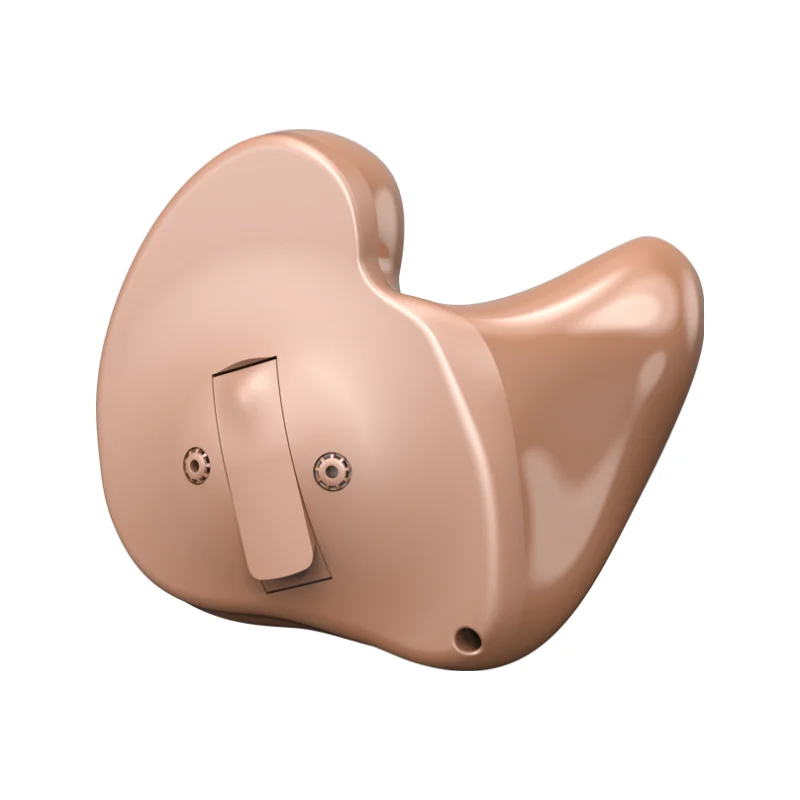
ITE
According to NIDCD, sits entirely in the outer part of the ear.
Devices that sit in the ear or in the ear canal. Nearly invisible in many ears, and the size is set by the hearing loss and the shape of the canal.
Updated: 02.11.2026 · Written by the G-Sound editorial team
According to NIDCD, sits entirely in the outer part of the ear.
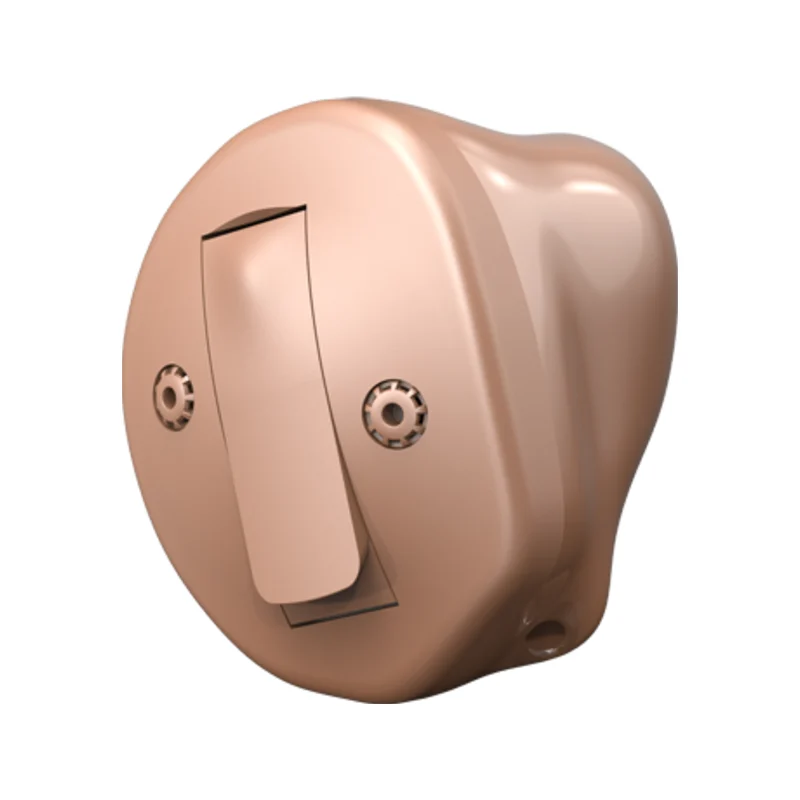
According to NIDCD, fitted to the size and shape of the ear canal.
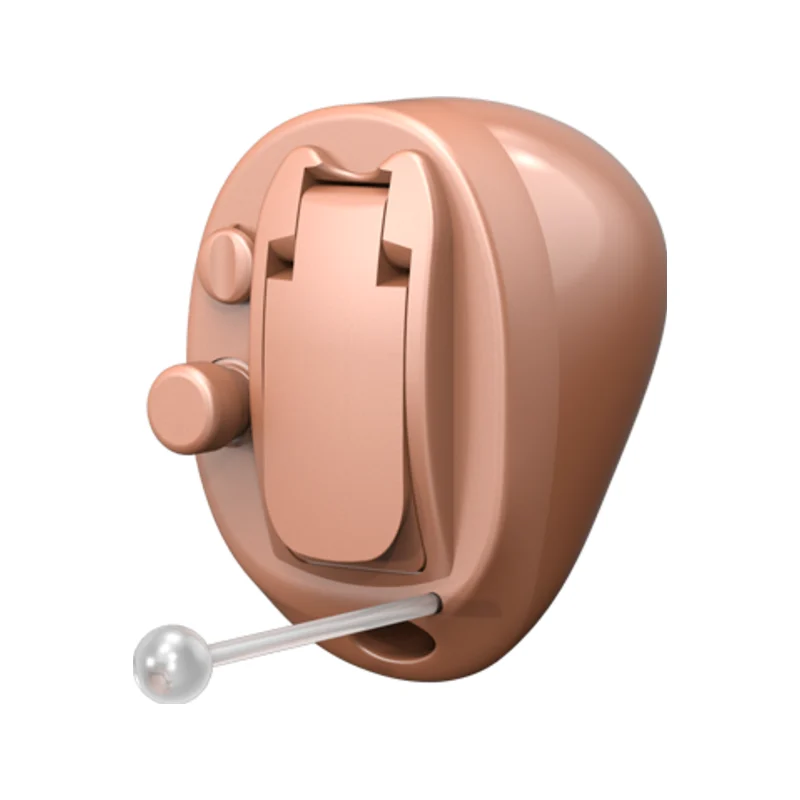
According to NIDCD, sits almost entirely inside the ear canal.
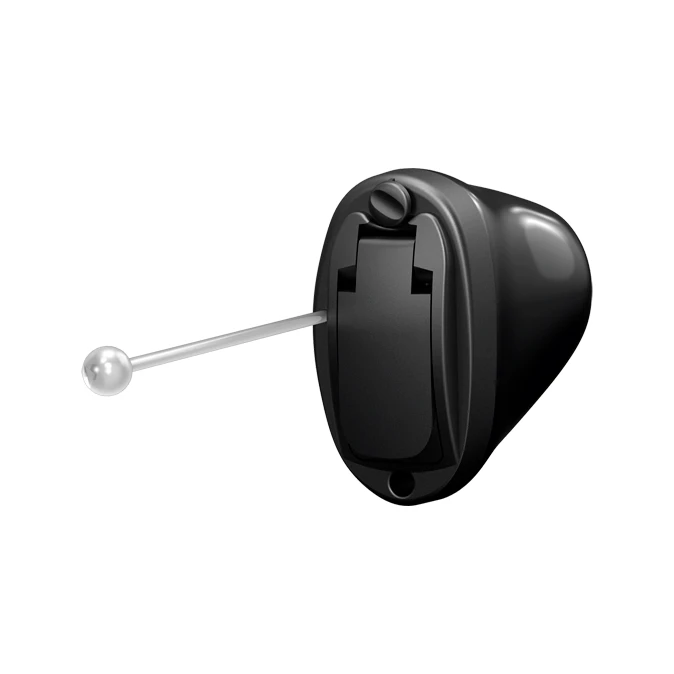
According to Oticon, placed deep in the ear canal. Appears in the Oticon Own and Own SI families.
The photos are examples of custom devices from Oticon. All photos are shown at the same size, so they do not reflect the proportions between the designs and are not to scale.
These terms describe a design, not a model. Each manufacturer offers different designs, and not every series has all of them. With us, in-the-ear devices are offered, for example, in the Oticon Own, Oticon Own SI and Oticon Zeal families, according to Oticon. Details by model are further down the page.
The table sums up what the sources we checked say. A cell without a source stays open for checking at the appointment, and we do not guess in it.
| ITE | ITC | CIC | IIC | |
|---|---|---|---|---|
| Where it sits | In the outer part of the earNIDCD | In the canal, by its size and shapeNIDCD | Almost entirely inside the canalNIDCD | Deep in the canalOticon, Own SI IIC |
| Handling | In the Oticon Own ITE FS, according to Oticon: a device that is easy to handle, with room for large manual controlsOticon, Own ITE FS | Canal devices are small, so they are sometimes harder to adjust and to removeNIDCD | Removed with a small removal cordOticon, Own IIC | |
| Power source in the Oticon models we checked | Not detailed on the pages we checked. Ask at the appointment, by model | Own and Own SI: replaceable size 10 batteryOticon, technical data sheets | ||
| Bluetooth in the Oticon models we checked | Own: Bluetooth or telecoil, one of the two depending on the configurationOticon, Own ITC / ITE | Not in the Own SI feature list, and not marked for Own. Do not assume Bluetooth without checking the modelOticon, family page and technical data sheet | ||
How visible each design is depends on the shape of the ear, the colour and the fit, and no design guarantees that it will not be seen. Sources and check dates are listed at the bottom of the page.
They sit inside the canal, with no part behind the ear. According to Oticon, Own SI devices are comfortable even with a hat, a mask or glasses. On the other hand, according to NIDCD, they have less room for a battery and for extra components such as a telecoil, and the size limits the power.
They have more room for components. According to NIDCD, a telecoil can sometimes be fitted in an ITE, and according to Oticon, in the Own ITC and ITE you can choose Bluetooth or a telecoil. They are more noticeable in the ear, and sometimes easier to put in and take out.
No design is ruled out just because of its type. These are the topics checked at the appointment, and the decision is made according to the check:
| Type | What it is | Usually considered for | How much shows |
|---|---|---|---|
| IIC | The smallest of the designs. Sits deep inside the ear canal | When the canal allows a deep design, and the power needed suits a small device | Nearly invisible in many ears |
| CIC | Sits almost entirely inside the canal | For those looking for a small device, when the canal and the test allow it | Usually only a little of it shows, and sometimes almost nothing |
| ITC | Fitted to the canal and fills its opening | When you want a small device with more room for components and handling | Shows a little at the opening of the canal |
| ITE | Fills the outer part of the ear | When easy handling, room for components or higher power matter | Visible in the ear |
A general table, not by brand. What suits you, and in which design, is decided after a hearing test and an ear impression. Visibility depends on the shape of the ear, the model, the colour and the fit, and no design guarantees that it will not be seen.
The size of the device depends on the hearing loss: the milder the loss, the smaller the device can be, and the more severe the loss, the larger it needs to be.
| Size | Design | Where it sits |
|---|---|---|
| Very small | IIC | Deep inside the canal |
| Small | CIC | Almost entirely inside the canal |
| Medium | ITC | At the opening of the canal |
| Large | ITE | In the outer part of the ear |
The size is set by the hearing loss and the shape of the canal.
We are experts in taking ear impressions. Thanks to the lab, we can build a very small device that fits the ear, even in a very narrow canal. The size is set after a test and an ear impression.
On the team: our lab technician, with 26 years of experience.
Custom earmold for an external device · Aids for putting in a hearing aid, for older adults (in Hebrew)
Looking for a nearly invisible device? Nearly invisible hearing aid: IIC and CIC · Very severe loss? In-the-ear device for very severe loss (in Hebrew)
If the test shows that a certain design does not suit you, we will present alternatives. Sometimes a receiver-in-canal device with a custom-made part gives a similar fit. Receiver-in-canal vs behind-the-ear (in Hebrew)
Is there an invisible hearing aid? Is there a rechargeable in-the-ear device? Does it connect to the phone? It is worth coming with these questions. General answers are in the frequently asked questions further down the page.
G-Sound markets all types of in-the-ear devices: Oticon, Bernafon, NewSound and more.
The details here are taken from Oticon's pages and technical data sheets, and were checked on 24.10.2026. Features change by configuration and technology level, so each model is checked on its own.
According to Oticon, five configurations: IIC, CIC, ITC, ITE half shell and ITE full shell. The ITC and ITE have Bluetooth or a telecoil, one of the two depending on the configuration. Calls without holding the phone and direct streaming exist only in the configurations with 2.4GHz. For the IIC and CIC, the technical data sheets list a size 10 battery.
Oticon Own pageAccording to Oticon, two configurations: IIC and CIC. According to the technical data sheet, a replaceable size 10 battery, and an optional push button on the CIC only. Bluetooth does not appear in the list of technical features.
Oticon Own SI page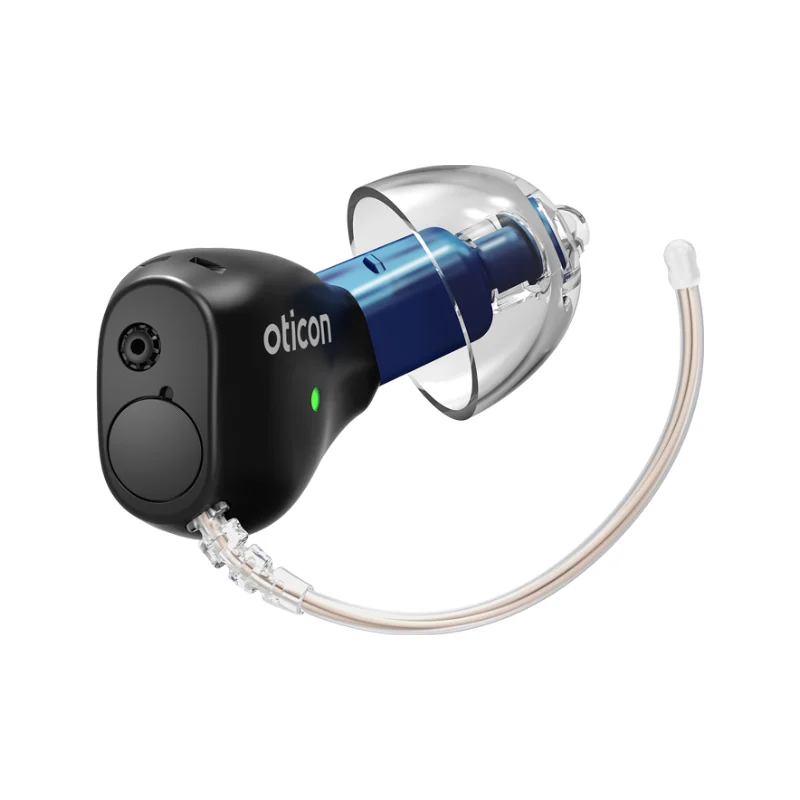
Oticon Zeal is an in-the-ear device from Oticon. Suitability is decided in a hearing test. According to Oticon, it is rechargeable, with Bluetooth LE Audio for streaming and for calls without holding the phone, and reception of Auracast broadcasts.
Oticon Zeal pageFor all the families: Oticon hearing aids. We will give details of further options in a conversation, as needed.
In an in-the-ear device all the components sit in the canal, so daily care focuses on the wax filter, the openings and drying. Filters and wear parts · Cleaning and drying kits (in Hebrew)
If you already have an in-the-ear device and notice that it moves, presses or whistles in the canal, it is worth having it checked. A shell that no longer sits well is checked as part of service and repairs.
Hearing aid types and accessories · In-the-ear devices · Oticon Zeal · Rechargeable or battery (in Hebrew) · Filters and wear parts · Special fitting solutions (in Hebrew) · Hearing tests · Recommended hearing aids: how to choose · How much does a hearing aid cost
Updated: 02.11.2026 · Written by the G-Sound editorial team. The information is general; the device type, parts and accessories are chosen after a test and according to the model.
Frequently asked questions
No device guarantees that it will not be seen. Designs that sit deep in the canal, such as IIC and sometimes CIC, are nearly invisible in many ears. Visibility depends on the shape of the ear, the model, the colour and the fit, and it is checked after a test and an ear impression.
According to NIDCD, ITC is fitted to the size and shape of the ear canal, and CIC sits almost entirely inside the canal. The difference is mainly in depth and size, and this affects handling and what can fit inside the device.
This is checked in a hearing test and a check of the shape of the ear. Not every canal and not every hearing loss allows every design. The decision is made after the test.
Yes. An in-the-ear device is usually made to the measure of the ear, so taking the impression is an important step. The size and design are set after a test.
Mainly on the hearing loss and the shape of the canal. The milder the loss, the smaller the device can be, and the more severe the loss, the larger it needs to be.
Even in a very narrow canal we can build a very small device that fits the ear. The size is set after a test and an ear impression.
A very severe loss needs power, and according to NIDCD the size of canal devices limits it. So larger designs are considered, or a behind-the-ear device with a custom earmold. What suits you is decided after a test.
According to Oticon, Oticon Zeal is rechargeable. For Oticon Own and Own SI in the IIC and CIC configurations, Oticon's technical data sheets list a replaceable size 10 battery. Other configurations are checked by model.
It depends on the model and the configuration. According to Oticon, Oticon Zeal has Bluetooth LE Audio, and in Oticon Own in the ITC and ITE configurations you can choose Bluetooth or a telecoil. In Own SI, Bluetooth does not appear in the list of technical features.
Not necessarily. A small design sits deeper, but it has less room for components, and it may be less easy to handle. The choice is made according to the test, the shape of the ear and everyday use.
An impression of the ear is taken with a method that suits the ear and the chosen design. The details of the process are explained in advance. A test and an ear impression can also be arranged at home, by prior arrangement.
G-Sound markets all types of in-the-ear devices: Oticon, Bernafon, NewSound and more. Oticon: according to Oticon, the Own, Own SI and Zeal families. Bernafon: Alpha in a CIC configuration. NewSound: a range of configurations, including in-the-ear devices.
Please do not send sensitive medical information in a message. We go over the relevant details on the phone.
Book a hearing test and an ear measurement, at home or at work, by appointment.
Call G-Sound to arrange a hearing test and an ear measurement.
055-3333338G-Sound is an authorized marketer of Philips hearing aids.