English-language hearing-aid service in Israel
Behind-the-Ear (BTE) Hearing Aids
The classic style: the body of the device sits behind the ear, and sound travels through a tube into the ear.
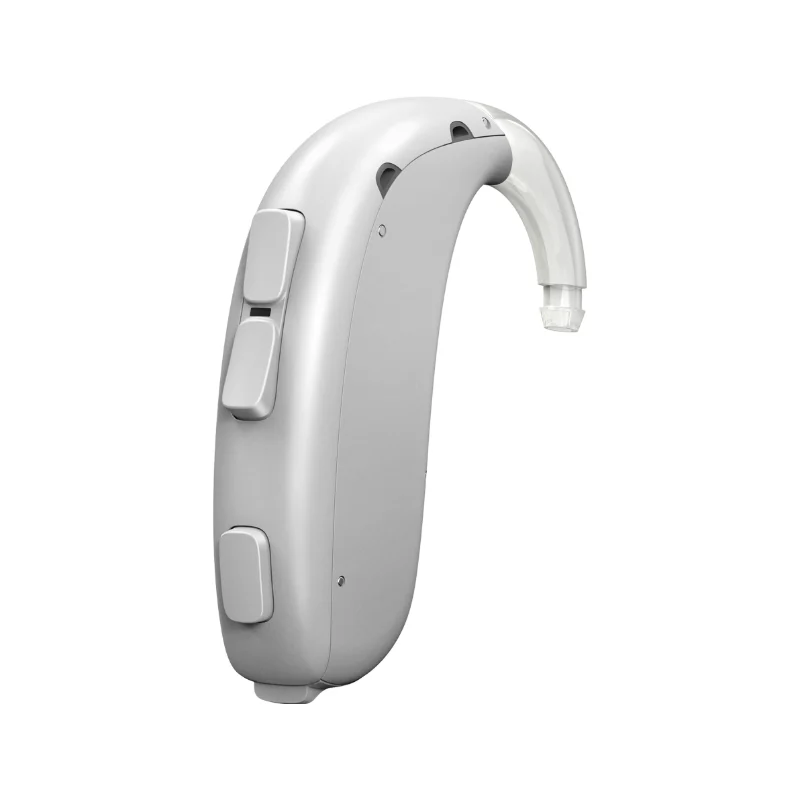
How is a behind-the-ear hearing aid built?
The body of the device holds the microphones, the processor, the receiver (speaker) and the power source. A hook or a thin tube comes out of the body, and the sound reaches the ear through it. With an earmold, the tube connects to an earmold made to the shape of your ear. In an open fitting, a thin tube ends in a soft dome. According to NIDCD, in the open fitting only a narrow tube goes into the ear canal.
With an earmold
The earmold is made to the measurement of your ear and holds the tube in place. It is considered when a precise, stable fit is needed, or when a dome does not stay in place well. About custom earmolds
With a thin tube and a dome
A narrow tube and a dome in a ready-made size. The ear usually feels more open. The type and size of the dome are chosen during the fitting. About domes
When is this style considered?
- When relatively high power is needed, according to the hearing test results
- When you find it easier to hold and handle a slightly larger device
- When you prefer the electronic part not to sit inside the ear canal
- When you already have an earmold that suits you and want to keep using it
These are points for discussion, not rules. Some people with similar needs choose different styles, and both are happy with their choice.
What gets replaced over time?
In a behind-the-ear hearing aid, the tube is usually the first part to wear. An earmold tube can harden or change colour over time, and a thin tube is replaced together with the dome or as instructed. The earmold itself is checked again when the shape of the ear changes or when it no longer sits well. With replaceable-battery devices, batteries are part of the routine; with rechargeable devices, the charger is.
We have gathered the list of parts and how often to check them in the hearing aid maintenance guide. Replacing a tube or an earmold is done as part of service.
What should you check before choosing?
- What does the hearing test show? The degree of hearing loss affects the power needed and the type of part that sits in the ear.
- Glasses, a mask or a hat? It is worth trying the device together with what you wear every day.
- Handling: try opening a battery door or placing the device in the charger with your own hands.
- Accessories: if TV or phone calls matter to you, we check what is available for the specific model.
Where can you read more?
Hearing aid types explained · Custom earmolds · Domes and filters · Hearing aids
Which sources did we use?
Written by the G-Sound editorial team. This is general information; the device type, parts and accessories are chosen after a hearing test and according to the model.
Which English guides are related?
Frequently asked questions
What do people ask about behind-the-ear hearing aids?
Is a behind-the-ear hearing aid big and noticeable?
Models come in different sizes. The body sits behind the ear, and with a thin tube the part visible from the front is relatively small. It is worth seeing and trying the device on your ear before you decide.
What is the difference between a behind-the-ear hearing aid and a receiver-in-canal hearing aid?
In a behind-the-ear hearing aid the receiver (speaker) is in the body of the device and sound travels through a tube. In a receiver-in-canal hearing aid the receiver itself sits in the ear canal and is connected by a thin wire.
Do I need an earmold, or is a dome enough?
It depends on the hearing test, the shape of the ear and the power needed. The decision is made as part of a professional fitting, and sometimes changes after a period of use.
Can I get a rechargeable device of this type?
There are behind-the-ear hearing aids with replaceable batteries and rechargeable ones, depending on the model. We check together what is available in the model that suits you.
Would you like to arrange an appointment?
Service is by prior appointment, at the customer's home, at the workplace and sometimes in the relevant everyday setting. Call G-Sound on 055-3333338.
Call G-Sound and continue in English.
055-3333338G-Sound is an authorized marketer of Philips hearing aids.