Why a schedule helps
Hearing aids work hard. They sit in or on the ear for most of the day, close to earwax, skin oils and sweat, and they are taken out, put in and charged again and again. Most problems people call about are not dramatic faults. They are small things that build up: a filter slowly blocking with wax, a dome that has hardened, charging contacts that need a wipe. A simple schedule catches these early.
This page is the overview. For the step-by-step cleaning routine, read how to clean hearing aids. For the small parts themselves, read domes, wax filters and small parts.
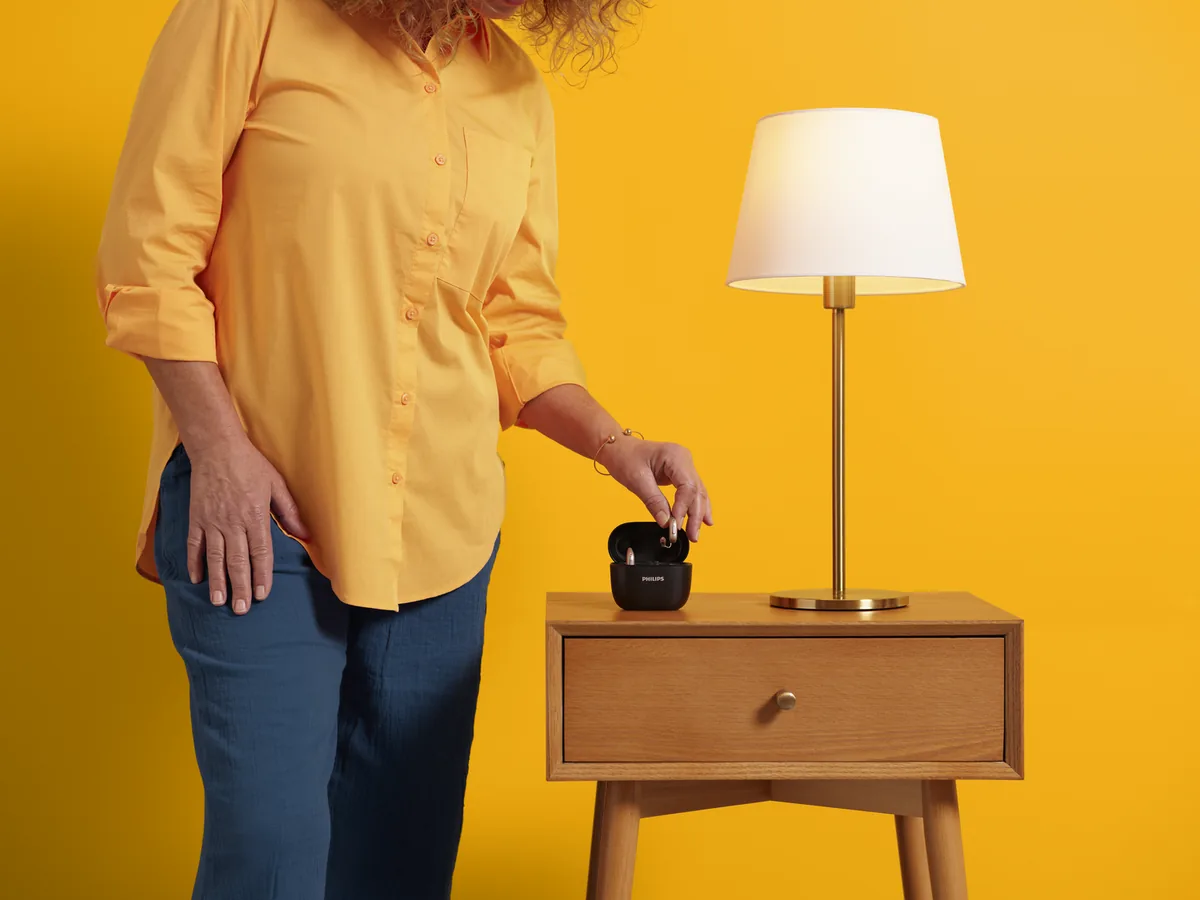
Every day
- Wipe the hearing aids and earpieces with a soft, dry cloth. Philips advises daily cleaning with a soft, dry cloth.
- Brush the microphone openings gently with the small brush supplied.
- Look at the dome or earmold for wax, cracks or a loose fit.
- Store them in the case, charger or a hearing-aid dryer, never loose on a table or in a pocket.
Every week
- Wax filters. Philips says the wax filter should be replaced when it is clogged or if the hearing aid sounds unusual. A weekly look makes this easy to spot.
- Charger. Wipe the charger with a dry cloth. Philips warns not to use water or cleaning fluids on the charging ports.
- Batteries. If your hearing aids use disposable batteries, check you have spares, and keep batteries away from children and pets.
Every month
Philips recommends replacing domes and Grip Tips at least once a month, or as your hearing care professional directs. Replacing a dome is a small task compared with the trouble a hardened or waxy dome can cause. If you use a custom earmold, check it for cracks and a blocked sound opening; see custom earmolds for hearing aids.
At check-ups
Some things are not for home maintenance: settings, the physical fit in the ear, and parts such as speaker units or tubes that are chosen at the fitting. Arrange a professional check if speech has become harder to follow, if the fit has changed, or if a part needs replacing that you have not been shown how to change. Follow-up visits are explained in follow-up and adjustments.
Moisture, heat and the Israeli climate
Humid coastal summers, sweat during a walk in August and sand at the beach are all hard on hearing aids. Philips says never to wash or immerse hearing aids in water or other liquids, and never to use a hair dryer or a microwave oven to dry them. If your hearing aids get damp, wipe them with a dry cloth and let them dry in the case or charger. Read hearing aids in the Israeli summer for seasonal tips.
Travelling
Pack the charger and cable, or spare batteries, in your hand luggage, along with spare domes and filters. If you travel abroad, check the plug type for your charger. More in flying with hearing aids.
A small maintenance kit
- Soft cloth and brush.
- Spare domes or tips in the right type and size.
- Spare wax filters and the tool for your model.
- A drying container or the case and charger.
- A note with the make, model and earpiece size, kept with the kit.
When maintenance is not enough
If the hearing aid is still weak, silent, crackling or not charging after cleaning and a new filter, stop and ask for help rather than trying harder at home. Start with hearing aid not working: checks by symptom, then contact us with the make, model and what you have tried. For Philips users: G-Sound provides first-line customer support for Philips hearing aids, including help with device use, app connectivity, cleaning, wax filters, accessories and basic troubleshooting. When a repair requires manufacturer laboratory service, the device is routed to Philips’s separate authorized laboratory.
Sources
- How to clean your hearing aids — Philips Hearing Solutions — accessed 22 October 2026
- How to take good care of your hearing aids — Philips Hearing Solutions — accessed 22 October 2026
- How to replace the wax filter — Philips Hearing Solutions — accessed 22 October 2026
- How to replace earpieces — Philips Hearing Solutions — accessed 22 October 2026
- Hearing Aids — NIDCD — accessed 22 October 2026
- Daily Care and Troubleshooting Tips for Hearing Aids — ASHA (PDF) — accessed 22 October 2026
Updated 22 October 2026 · Written by the G-Sound editorial team. General information only; it does not replace a hearing assessment or medical advice.
Frequently asked questions
How often should hearing aids be maintained?
A quick wipe and dry storage every day, a check of filters and earpieces every week, new domes or tips about once a month or as your hearing care professional directs, and a professional check when the sound or fit changes.
How often should I change the domes?
Philips recommends replacing domes and Grip Tips at least once a month, or as your hearing care professional directs.
What should I do if my hearing aids get wet?
Wipe them with a dry cloth and let them dry in the case or charger. Never use a hair dryer or a microwave, and never put them in water.
Can I clean the charger with a wet cloth?
No. Wipe it with a dry cloth. Philips warns not to use water or cleaning fluids on the charging ports.
When should I stop and ask for help?
If the hearing aid is still weak, silent, crackling or not charging after cleaning and a new filter. Contact G-Sound with the make, model and what you have tried.