English-language hearing-aid service in Israel
Receiver-in-Canal (RIC / RITE) Hearing Aids
A small body behind the ear, a receiver that sits inside the ear canal, and a thin wire connecting them.
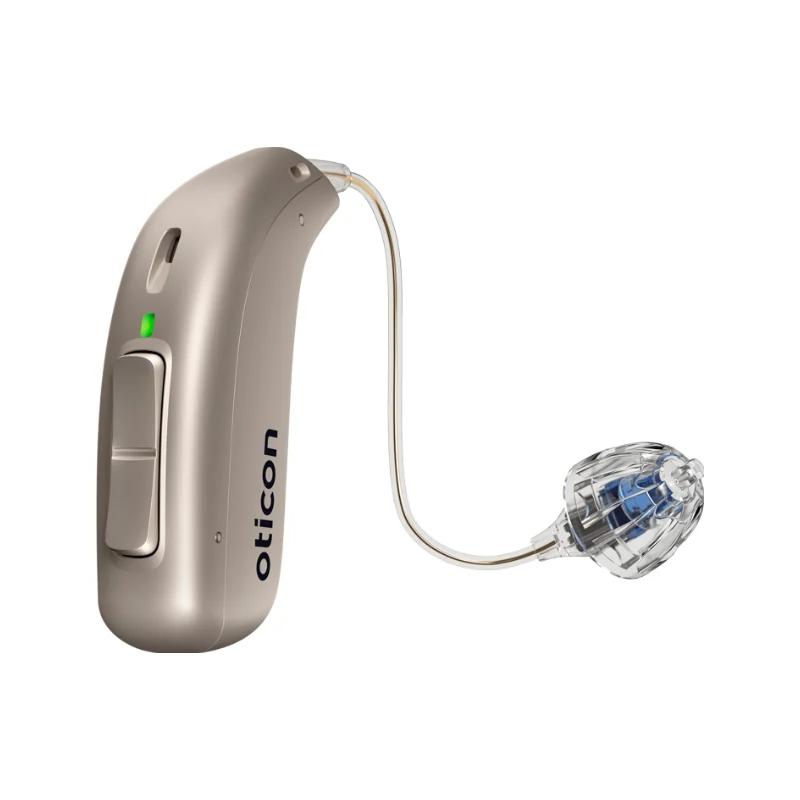
How is a receiver-in-canal hearing aid built?
The main difference from a classic behind-the-ear hearing aid is where the receiver (speaker) sits. Instead of the sound leaving the body and travelling through a tube, the receiver is inside the ear canal. That is why the body behind the ear can be relatively small, and the connection visible from the front is a thin wire.
With receiver-in-canal devices, the power and length of the receiver are chosen during the fitting. The dome at the tip is replaced from time to time.
Which parts sit in the ear canal?
The receiver
Chosen by length and by power. In many configurations it can be replaced separately from the body of the device, depending on the model.
A dome or a custom part
An open, closed or other dome, or a part made to the measurement of the ear when a more precise fit is needed. About domes
A wax filter
Protects the receiver opening from wax and dirt, and is replaced as needed. About filters
What does this mean day to day?
- The receiver is inside the ear canal, so the filter and the dome are part of the care routine
- The receiver wire is thin; it is worth learning during the fitting how to put the device in and take it out without pulling on the wire
- A dome that does not sit steadily is noticed quickly, which is why size and type are checked
- If handling small parts is difficult, that is a point to discuss already when choosing
Which receiver-in-canal models do we offer?
The miniRITE style, in which the receiver sits in the ear canal, appears among others in the Philips HearLink range. Oticon and other brands also offer such styles. The details of each model, such as charging, connectivity and accessories, are checked against the model itself.
What should you check before choosing?
- Hearing test results: they determine the receiver power and the type of part in the ear.
- Comfort in the ear canal: some ears feel a dome more than others. Try before you decide.
- Care routine: are you comfortable replacing a filter and a dome, or will someone in the family help?
- Service: what happens when the receiver needs replacing? Check this in advance.
Where can you read more?
Hearing aid types explained · Domes and filters · Hearing aid service and repairs
Written by the G-Sound editorial team. This is general information; the device type, parts and accessories are chosen after a hearing test and according to the model.
Which English guides are related?
Frequently asked questions
What do people ask about receiver-in-canal hearing aids?
What is the difference between RIC and RITE?
Both names describe the same idea: a receiver that sits in the ear canal and connects to the body of the device behind the ear. Different brands use different names.
Can just the receiver be replaced?
In many configurations yes, depending on the model. Replacement includes choosing a suitable length and power, so it is done as part of service and not on your own.
Is a receiver-in-canal hearing aid suitable for every hearing loss?
Not necessarily. The receiver power and the part in the ear are chosen according to the hearing test. In some situations another style is considered. The decision is made after a hearing test.
The device sounds weak or muffled. Is it the receiver?
There can be several reasons, for example a blocked filter. Do not take the device apart. Contact service and describe what is happening, in which ear and since when.
Would you like to arrange an appointment?
Service is by prior appointment, at the customer's home, at the workplace and sometimes in the relevant everyday setting. Call G-Sound on 055-3333338.
Call G-Sound and continue in English.
055-3333338G-Sound is an authorized marketer of Philips hearing aids.